
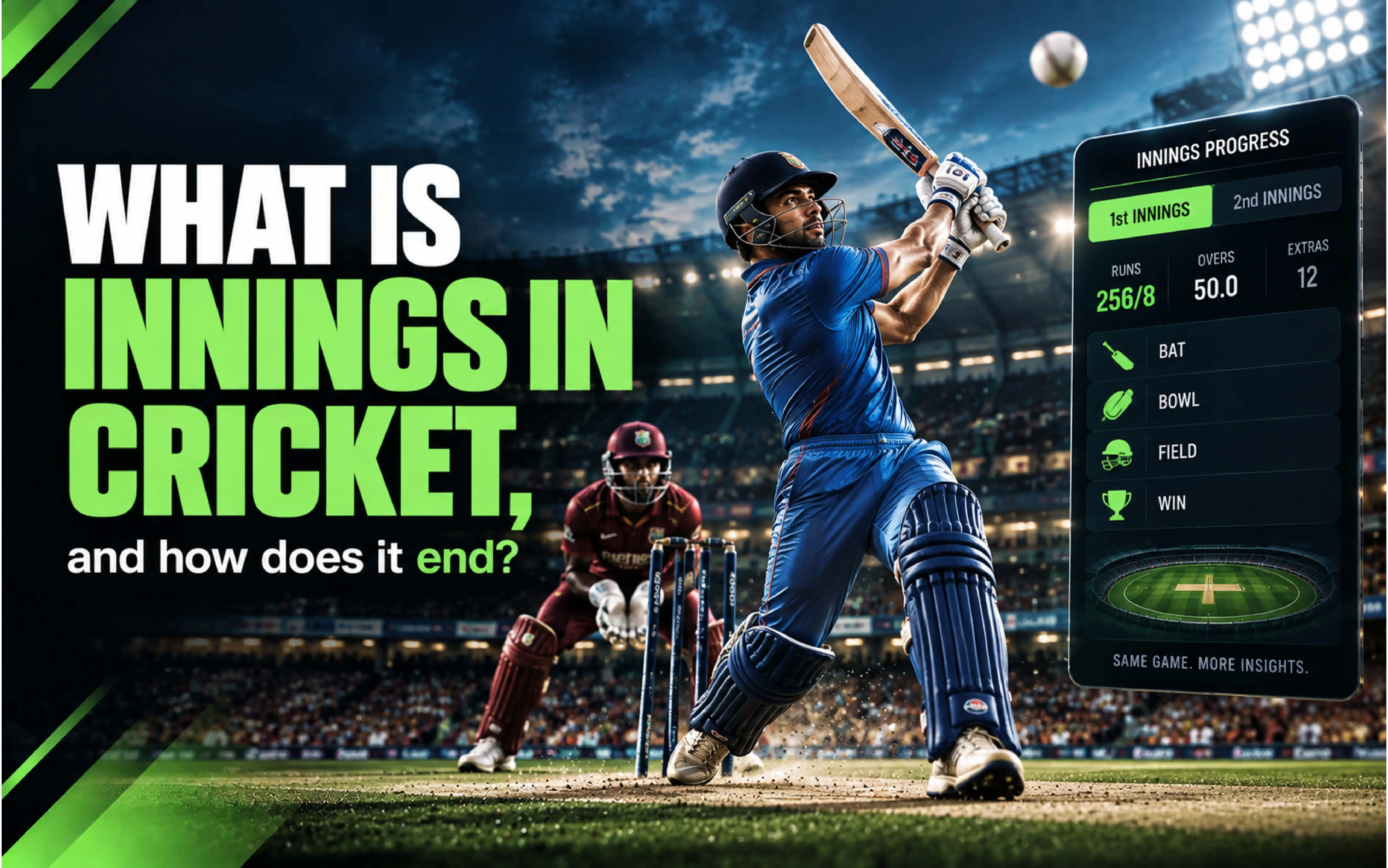
What Is Innings in Cricket, and How Does It End?
An innings can last three hours or five days, depending on the format. Here's what an innings actually is, and the six different ways one can end.
An innings in cricket is a team's turn to bat, and depending on the format, that single turn can last anywhere from a few hours to the better part of a Test match day. Understanding what is innings in cricket, and the different ways it can end, matters if you're following the game closely, and it matters even more if you're getting into online cricket betting, since the state of an innings shapes almost every market on offer. This piece covers what an innings actually means, how the different formats limit it, and the six distinct ways one can come to a close.
What Is Innings in Cricket? The Quick Answer
An innings is the period during which one team bats while the other bowls and fields. In T20 and ODI cricket, each team gets one innings, for a total of two per match. In Test cricket, each team gets two innings, for a total of four across the match. The six ways an innings can end are: reaching the over limit, all ten wickets falling, a declaration, the match being won early, a time limit being reached, or the match being abandoned.
How the Format Decides the Length
Overs are what actually define how long an innings can run. A T20 innings is capped at 20 overs, and a full match typically wraps up in around three hours. An ODI innings runs to 50 overs, closer to an 8-hour day. Both formats are open to any ICC member nation, which is part of why they've spread far beyond cricket's traditional strongholds.
Test cricket works differently. There's no over limit at all, an innings only ends once all ten wickets fall, or the batting side chooses to close it out early. That lack of a limit is exactly why Tests can run four or five full days, and why each side gets two innings rather than one, twice the batting, twice the bowling, spread across a match that can genuinely go either way until the final session.
Declarations: Why a Captain Would Close an Innings Early
A declaration is when the batting captain voluntarily ends the innings before all ten wickets have fallen. It sounds strange on paper, why stop batting when you still can, but the logic is about time, not runs. In a Test match, a captain with a commanding total and only so many days left on the clock will often declare to leave enough time to actually bowl the opposition out twice. Batting on for extra runs feels safer in the moment, but a team that never declares risks running out of overs to force a result at all.
Follow-On: The Rule Nobody Explains Properly
If the team batting second finishes more than 200 runs behind the team that batted first in a five-day Test, the fielding captain can enforce the follow-on, forcing that team to bat again immediately rather than the sides alternating normally. It's a genuine gamble though. Enforcing it tires out your own bowlers, who have to bowl again almost immediately with no rest.
Headingley 1981 is the match every cricket fan eventually hears about. England followed on 227 runs behind Australia, a position that looked hopeless, and were 135 for 7 in that second innings before Ian Botham played an unbeaten 149, followed by Bob Willis taking 8 wickets for just 43 runs to bowl Australia out for 111. England won by 18 runs. In roughly 150 years of Test cricket, only four teams have ever won after being forced to follow on. That's how rare, and how legendary, a genuine comeback from that position actually is.
How an Innings Actually Ends
Beyond the over limit already covered, an innings can end in several other ways. All out happens when all ten wickets of the batting side fall, the standard way an innings closes in any format. A declaration, as covered above, is the batting captain's own choice to stop early. The match can also simply be won, if the team batting second (or fourth, in a Test) passes the target total, the match ends immediately and there's no need to complete the remaining overs. Occasionally an innings is abandoned, almost always due to weather, though this has become rarer as ground drainage and scheduling have improved. And in some formats, a fixed time limit, rather than an over count, decides when an innings has to stop.
First Innings vs. Second Innings: A Real Example
The order of innings is decided by the pre-match toss, and it genuinely changes how each side has to think. The team batting first sets a target without knowing what they're actually defending. The team batting second, by contrast, knows exactly what number they need.
Here's what that looks like in practice. Say Team A bats first and posts 180 runs in a T20 innings. Team B, batting second, now knows precisely what's required: 181 to win. That clarity changes their approach entirely, they can pace an innings around a known target, rather than guessing at what might be competitive. This is exactly why a lot of online cricket betting markets and activity shift once the first innings wraps up, markets tied to the chase, whether Team B clears the target, by how many wickets, in how many overs, only really sharpen once that number is locked in.
Individual Innings: A Different Use of the Same Word
The term also applies to a single batter, not just a team. A player's individual innings runs from the moment they walk out to bat until they're dismissed, or until the team's innings itself ends while they're still at the crease. So you'll hear commentators describe "a fine innings of 74" for one batter, entirely separate from the team's overall innings total.
Also Read: What Is DRS in Cricket?
 1
1Understanding Sports Betting Markets on Arena365
🎲 Casino 0 2
2Dragon Tiger Casino Game: Why 1:1 Is Not a 50/50 Bet
🎲 Casino 0 3
3Online Casino Software Trends in 2026 and Beyond, and What They Mean on Arena365
🎲 Casino 0 4
4How Betting Odds Work on Arena365
🎲 Casino 0 5
5SPORTSBOOK BETTING ODDS: WHY UNDERDOGS ARE A WORSE BET THAN THEY LOOK
🎲 Casino 0
Frequently asked questions
An innings is a team's full turn at batting. An over is a set of 6 legal deliveries bowled before a new bowler takes over. Many overs make up a single innings.
Two, one per team. Each team's innings is capped at 20 overs.
It means all ten wickets of the batting side have fallen, ending that team's innings.
Usually to leave enough time in a Test match to bowl the opposition out twice, rather than risk running out of overs while chasing a result.
Many markets, team totals, chase-specific bets, player performance totals, shift meaningfully once the first innings ends and a target is set, since the second team's approach changes entirely once they know the number they need.
Expertise · Cricket, IPL & Cricket Betting Analysis
Rahul Sharma is a cricket analyst specializing in IPL, international cricket, and T20 competitions. With years of experience following cricket trends, player performances, team strategies, and match statistics, Rahul creates data-driven insights, previews, and betting analysis. His work focuses on helping readers better understand cricket markets through form analysis, statistics, and responsible betting approaches.
Related guides & analysis


Nicholas Pooran Masterclass series
Inside the mindset, preparation and strategy behind T20 cricket.

Nicholas Pooran Cricket Masterclass 2: 5 Elite Batting Lessons You Can Learn From
Arena365 ambassador Nicholas Pooran breaks down the batting mindset that separates good players from truly elite ones.
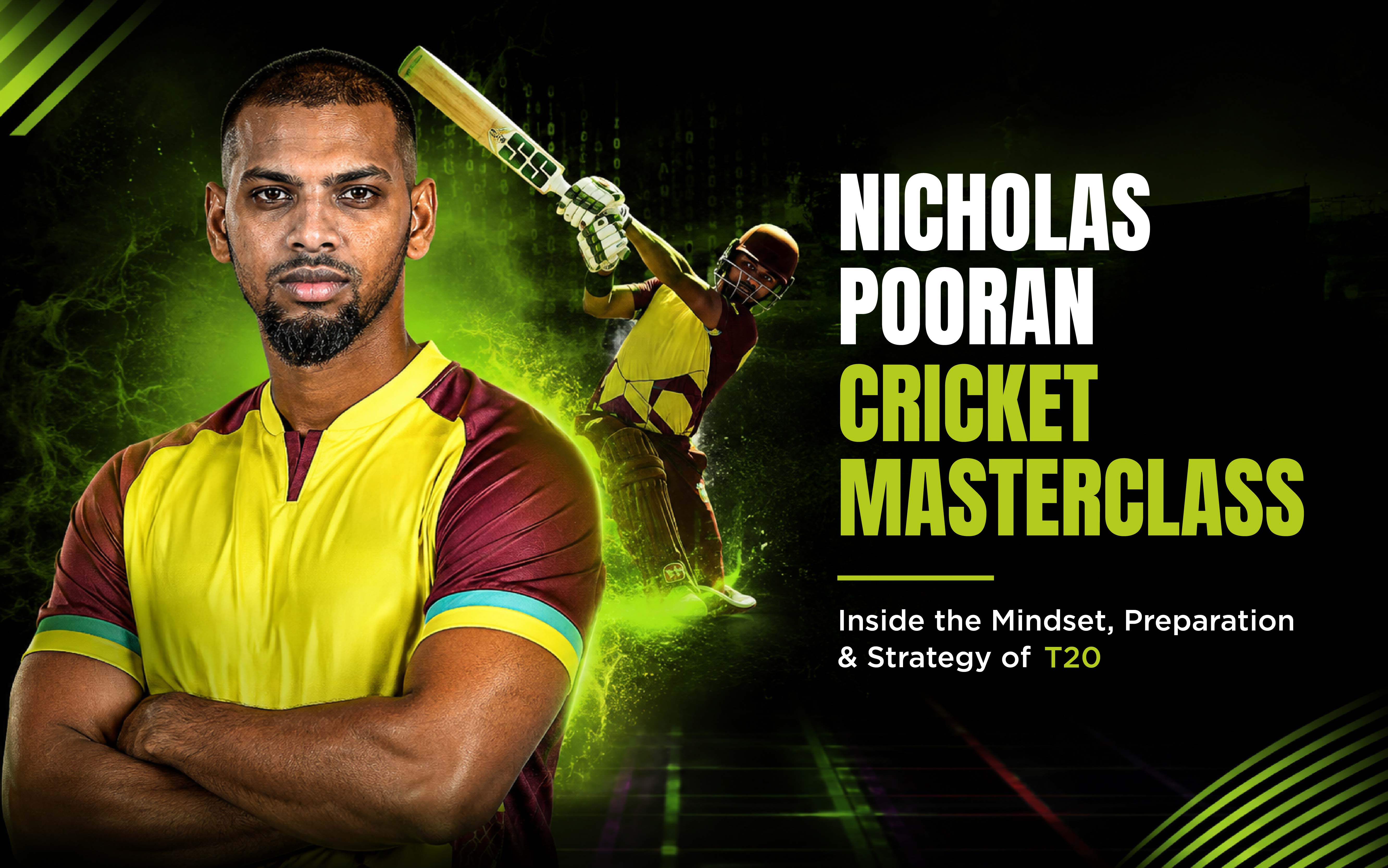
Nicholas Pooran Cricket Masterclass: Inside the Mindset, Preparation & Strategy of T20
Watch Nicholas Pooran break down T20 batting, technique, mindset, and preparation in Arena365’s five-part masterclass, launching September 3 on YouTube.
Latest articles
Understanding Sports Betting Markets on Arena365
Learn how sports betting markets work on Arena365, from match winners and handicaps to totals, combo bets, and live in-play markets across all sports.
Dragon Tiger Casino Game: Why 1:1 Is Not a 50/50 Bet
Learn why a 1:1 Dragon Tiger payout is not a true 50/50 bet, how Tie rules affect your stake, and what to check before placing your first online wager.
Online Casino Software Trends in 2026 and Beyond, and What They Mean on Arena365
Online casino software is evolving fast. See how browser-led design, live streaming, secure payments, and regulation are shaping Arena365 in 2026 ahead.
How Betting Odds Work on Arena365
Those numbers on the screen tell a bigger story. See how betting odds on Arena365 work, why they change, and what they really mean before you bet first.