
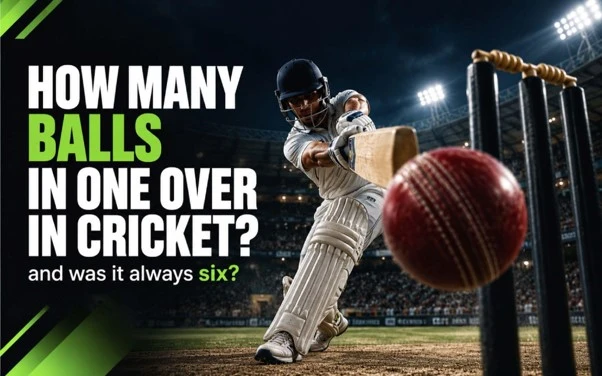
How Many Balls In One Over in Cricket? And Was It Always Six?
Six balls make an over today, but cricket didn't always agree on that number. Here's the real history, plus how overs shape the game and the betting around it.
Ask anyone there are how many balls in one over in cricket and you'll get the same answer every time: six. True, everywhere, every format, today. But here's the thing nobody tells you, it wasn't always six. Cricket spent most of the 20th century arguing about this. Different countries picked different numbers and just stuck with them. For decades. This is that story, plus what an over actually does in the game, and how it all ties into the betting markets built around it.
What Is an Over, Exactly?
Six legal deliveries, bowled by one bowler, from one end. Then someone else takes over. That's it, that's an over.
But "legal" is doing some work in that sentence. A no-ball or a wide doesn't count toward the six, it just gets bowled again on top. So you'll see overs stretch to seven, eight, sometimes nine actual deliveries, even though only six of them count. In the 1990 Shell Trophy final between Wellington and Canterbury, New Zealand's Bert Vance bowled the longest over in professional cricket history, 22 deliveries in total. Wellington needed an outright win to secure the title, but Canterbury had gone defensive, content to bat out a draw rather than chase down a gettable target. Vance's wild over, deliberately loaded with no-balls and full tosses, was Wellington's attempt to shrink the equation so drastically that Canterbury would be lured back into attacking mode, and back within reach of getting bowled out. Makes one rethink the question on how many balls in one over, doesn’t it?
One more rule worth knowing: the same bowler can't go twice in a row. Six balls done, ball goes to a teammate. Rotation continues all innings.
Six Balls Took a Really Long Time to Actually Stick
Six wasn't the first number for the number of legal deliveries in an over. It wasn't even the only number for most of the last century.
Go back far enough and overs were four balls. That lasted until 1889. Then five, for about a decade. By 1900 most of cricket had landed on six. Most. Not all.
Australia said no thanks in 1922-23 and switched to eight-ball overs, the logic being fewer changeovers meant more actual cricket packed into a day. New Zealand copied them two seasons later. South Africa ran eight-ball overs from 1938 clear through to 1957. England even tried it domestically in 1939, one season only. Pakistan did eight-ball overs too, 1974 to 1977. New Zealand, weirdly, went back to eight balls a second time in 1968, stuck with it a decade, before finally giving up for good.
So when did everyone actually agree? 1979-80. And the reason is almost funny, it wasn't tradition or fairness, it was TV money. Kerry Packer's World Series Cricket needed more ad breaks in Australia, and shorter overs meant more breaks. A decades-long international disagreement got settled by a broadcast deal.
Overs Are What Actually Separate the Formats
Test cricket has no over limit at all. None. An innings just runs until all ten wickets fall, which is exactly why a Test can eat up four or five full days. ODIs cap it at 50 overs a side, roughly an 8-hour day. T20 cuts that down hard, 20 overs, done in about three hours, built for people who don't want to commit a whole day to watching cricket.
Only 12 countries get to play Test cricket, the ICC Full Members: India, Australia, England, Pakistan, Sri Lanka, South Africa, New Zealand, West Indies, Bangladesh, Zimbabwe, Afghanistan, Ireland. ODIs and T20Is are more open, any ICC member can play those, Full or Associate, which is a big part of why T20 specifically has spread so fast into places cricket barely used to touch.
Six Overs That Change the Whole Innings
Every T20 opens with a Powerplay, the first six overs, where the fielding side can't stack players out on the boundary the way they normally would. ODIs run a Powerplay too, but it's longer, the first 10 overs are mandatory, with two more 5-over Powerplay blocks later in the innings that the batting and bowling sides get to choose when to use. Fewer fielders deep means batters get rewarded for swinging early. That's exactly why Powerplay scoring tends to run hotter than the middle overs, and why a market like "runs after 6 overs" behaves nothing like a full-innings total.
When a Match Won't Settle, There's the Super Over
Tied T20 match? Doesn't get decided by boundary count or a coin flip. It goes to a Super Over, one over each, three batters, one bowler, whoever scores more wins outright. Still tied after that? Do it again. It's basically the whole match compressed into six balls, all the pressure with none of the buildup.
Where Overs Actually Show Up in Cricket Betting
Because overs control both pace and format, they're baked into a huge chunk of what you can actually bet on. Arena365 runs plenty of over-by-over totals, will a team's runs after over 6, or over 10, land above or below a set number. You can find them all under cricket in the sports section. Then there's the live cricket betting market of Next Over Runs, purely live, purely about the next six balls, nothing about how the whole innings ends up.
Maiden overs get their own market too on bigger matches on Arena365, a bowler getting through all six balls without conceding a single run. Completely different kind of bet than a totals line, you're betting on perfect execution, not a number.
 1
Andar Bahar Live Game: How the Table Actually Works
🃏 Live Casino 0 2
Top 10 Casino Games Online: A Global Ranking Across Every Category
🎲 Casino 0 3
How a Casino Game Online Roulette Streak Created the Monte Carlo Fallacy
🎲 Casino 0 4
Online Casino Slots: Which Kind of Player Are You?
🎲 Casino 0 5
Teenpatti Online Game: How One Day Teen Patti Classic Actually Works
🎲 Casino 0
Frequently asked questions
Six legal ones. No-balls and wides don't count, they just get re-bowled on top.
No. Four, five, and eight balls have all been standard at different points, depending on the country. Six only became universal from the 1979-80 season.
No. Six balls, then it's someone else's turn, same end or the other one.
20 a side. 40 total across the whole match.
Super Over. One over each side, highest score wins. Still tied? Do it again.
Expertise · Cricket, IPL & Cricket Betting Analysis
Rahul Sharma is a cricket analyst specializing in IPL, international cricket, and T20 competitions. With years of experience following cricket trends, player performances, team strategies, and match statistics, Rahul creates data-driven insights, previews, and betting analysis. His work focuses on helping readers better understand cricket markets through form analysis, statistics, and responsible betting approaches.
Related guides & analysis


Nicholas Pooran Masterclass series
Inside the mindset, preparation and strategy behind T20 cricket.
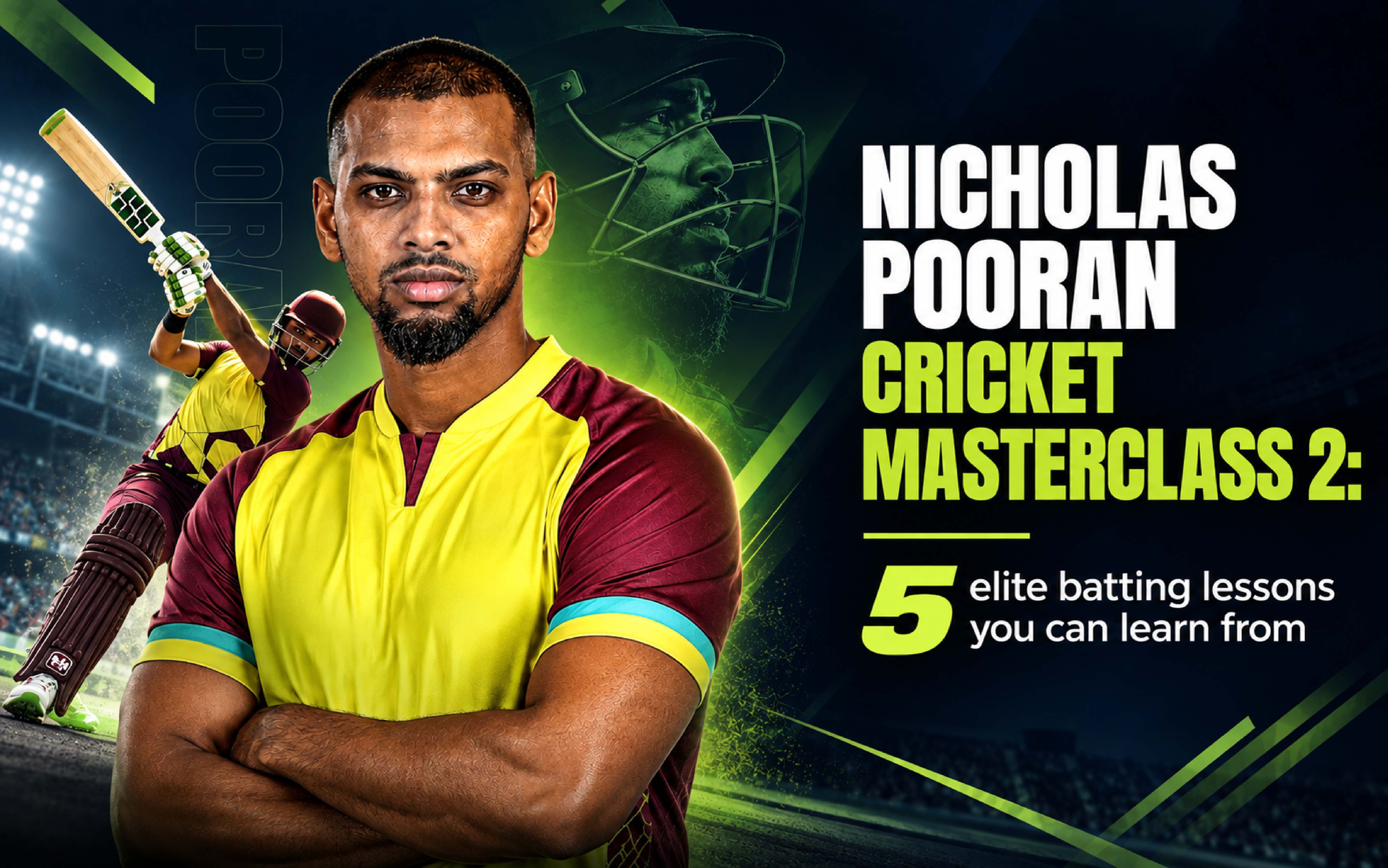
Nicholas Pooran Cricket Masterclass 2: 5 Elite Batting Lessons You Can Learn From
Arena365 ambassador Nicholas Pooran breaks down the batting mindset that separates good players from truly elite ones.
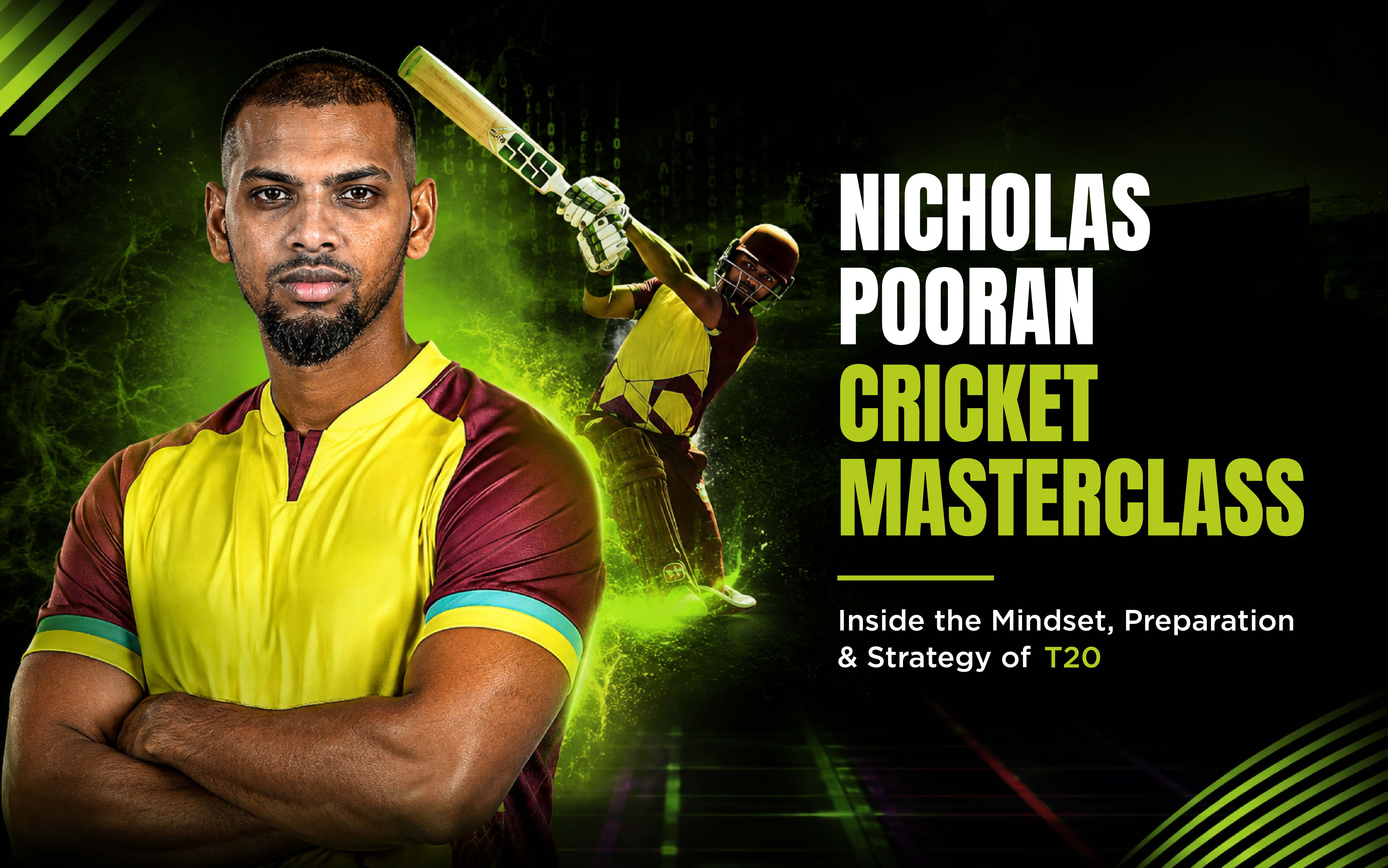
Nicholas Pooran Cricket Masterclass: Inside the Mindset, Preparation & Strategy of T20
Watch Nicholas Pooran break down T20 batting, technique, mindset, and preparation in Arena365’s five-part masterclass, launching September 3 on YouTube.
Latest articles
Andar Bahar Live Game: How the Table Actually Works
A rules-first breakdown of one of the simplest live card games around, and why the two sides don't pay out quite the same.
Top 10 Casino Games Online: A Global Ranking Across Every Category
Ten games, ten different reasons to play them. Here's what actually earns a spot on a genuine top 10 casino games online list.
How a Casino Game Online Roulette Streak Created the Monte Carlo Fallacy
In 1913, a Monte Carlo roulette wheel landed on black so many times in a row that players lost fortunes betting red was "due."
Online Casino Slots: Which Kind of Player Are You?
Every regular on online casino slots plays for a slightly different reason, and most players fit a handful of recognizable styles.