

T20 Betting Odds and the Recency Trap: Why the Last Over Feels Bigger Than It Is
T20 betting odds often swing harder on the last over played than the actual math behind the match situation justifies.
Twenty-six runs off one over. The number alone makes it feel like the match just swung completely. Sometimes it did. Often it didn't, not as much as the next price suggests. T20 betting odds are especially prone to overreacting to whatever just happened, and there's a real psychological reason why. That tendency has a name, recency bias, and it shows up anywhere people have to judge a sequence of events in real time. A T20 innings is basically a live stream of small, fast-moving samples, over after over, and each one arrives with its own temporary gravity, pulling attention away from the overs that came before it. The last thing that happened always feels like the most important thing that happened, whether or not the math agrees.
Key Points
What drives the overreaction in T20 pricing:
Recency bias means recent events get weighted more heavily than older ones, even when they carry the same statistical value
A T20 innings is only 120 balls, a tiny sample compared to an ODI's 300, so each over matters proportionally more, but not infinitely more
A price can swing sharply after one big over even when the underlying match situation hasn't fundamentally changed
A below-par over gets overweighted the same way a huge one does, in the opposite direction
Separating a genuine shift in the game from a vivid but small sample is the real skill here
What Recency Bias Actually Is
Recency bias is a well-documented pattern in how people judge information, the most recent event in a sequence gets weighted more heavily in a decision than it statistically deserves, simply because it's freshest in memory. It shows up in sports betting research specifically, bettors tend to overreact to a team's last few results and underweight a longer, more reliable form sample. Mid-innings pricing is a near-perfect setting for this bias to play out in real time.
A batter smashing 26 off an over is vivid. It's the thing that just happened, it's easy to picture, and it feels like obvious new information. A quieter, more representative sample, the other five overs bowled in the same period, carries just as much statistical weight but doesn't feel nearly as important, because nothing dramatic happened in them.
Why a Small Sample Still Moves the Price a Lot
T20 only gives each side 120 balls. An ODI gives 300. That smaller sample means any single over genuinely does carry more proportional weight in a T20 innings than the same over would in a longer format, there's simply less time left to average it out. This is real, and it's one legitimate reason these prices move more sharply than ODI prices do over an equivalent stretch of play.
The trap is treating that proportional weight as unlimited. A big over matters more in T20 than in a 50-over match, but it still doesn't rewrite the entire remaining innings on its own. Fourteen overs still have to be bowled after a big one in the powerplay, and plenty can still happen in them, something Arena365 bet markets continue pricing for right up to the final ball.
Both Directions Get Overweighted the Same Way
Recency bias doesn't just inflate big moments, it deflates quiet ones just as unfairly. A team that goes three overs without a boundary can see the price tilt against them sharply, as though the whole innings has stalled, even when a quiet stretch against tight bowling is a completely normal part of a T20 innings rather than a sign of anything structurally wrong. The same vividness effect runs in reverse, a dull over feels like more evidence of trouble than it actually carries.
This cuts both ways for anyone reading T20 betting odds mid-innings. A sharp move after one over, in either direction, deserves a second look before being read as a genuine shift in who's actually winning the match.
Telling a Real Shift From a Vivid Moment
The useful question after any dramatic over isn't whether something happened, obviously it did, it's whether the underlying situation has actually changed enough to justify how far the price just moved. A required run rate that shifts from 9 to 7 after a big over is a real, calculable change. A price that moves twice that much on the same event is leaning on more than the math alone, it's leaning on how memorable the over felt.
Myth vs Fact
Myth: T20 betting odds moving sharply always reflects a real shift in the match.
Reality: recency bias means the price sometimes overreacts to a vivid but statistically small event, not just a genuine change in the game state.
Myth: a quiet over means a team is losing control of the innings.
Reality: a few overs without a boundary is a normal part of T20 cricket, not necessarily a sign anything has actually gone wrong.
Myth: because T20 has fewer overs, every single one should move the price by roughly the same amount.
Reality: overs do carry more proportional weight in a shorter format, but that weight isn't unlimited, fourteen overs left still means plenty can change.
Reading the Price Mid-Innings on Arena365
T20 betting odds on Arena365 bet markets for live cricket matches reprice continuously through an innings, and recognising when a shift reflects a real change in the required run rate versus a vivid but small sample is the difference between reading the price well and getting pulled along by it. Checking the actual required rate and overs remaining, not just how big the last over looked, gives a steadier read than reacting to whatever just happened on screen.
Arena365 is intended for entertainment purposes only and is available to users aged 18 and above, licensed by the Anjouan Gaming Authority. Please play responsibly and within your means, and reach out to [email protected] if you ever need support.
Also Read: How to Bet on IPL Matches and the Easiest Markets to Start With
 1
Who Is the Most Dangerous Batsman in the World Right Now?
🏏 Cricket 0 2
Cricket Bet Online: 7 Bowling Techniques Every Bettor Should Recognize
🏏 Cricket 0 3
How to Win Online Slots: Why the Wait Between Wins Is the Whole Design
🎲 Casino 0 4
Tennis Betting Odds: Why a Single Set Can Flip the Whole Price
🎲 Casino 0 5
Football Betting Odds: Why 1X2 Prices Move the Way They Do
⚽ Football 0
Frequently asked questions
A T20 innings only has 120 balls compared to an ODI's 300, so each over carries proportionally more weight, but recency bias can push that reaction further than the math alone justifies.
It's the tendency to weight the most recent event, like a big over, more heavily than older information, even when a longer sample carries the same or greater statistical value.
Check the actual required run rate and overs remaining rather than just how dramatic the last over looked, the math tells a steadier story than the moment does.
Arena365 bet markets reprice continuously through a T20 innings, visible live on the match page alongside the required run rate and overs remaining.
No, you don’t need to download an app because it runs directly in your device’s browser. No APK download needed either.
Expertise · Cricket, IPL & Cricket Betting Analysis
Rahul Sharma is a cricket analyst specializing in IPL, international cricket, and T20 competitions. With years of experience following cricket trends, player performances, team strategies, and match statistics, Rahul creates data-driven insights, previews, and betting analysis. His work focuses on helping readers better understand cricket markets through form analysis, statistics, and responsible betting approaches.
Related guides & analysis


Nicholas Pooran Masterclass series
Inside the mindset, preparation and strategy behind T20 cricket.

Nicholas Pooran Cricket Masterclass 2: 5 Elite Batting Lessons You Can Learn From
Arena365 ambassador Nicholas Pooran breaks down the batting mindset that separates good players from truly elite ones.
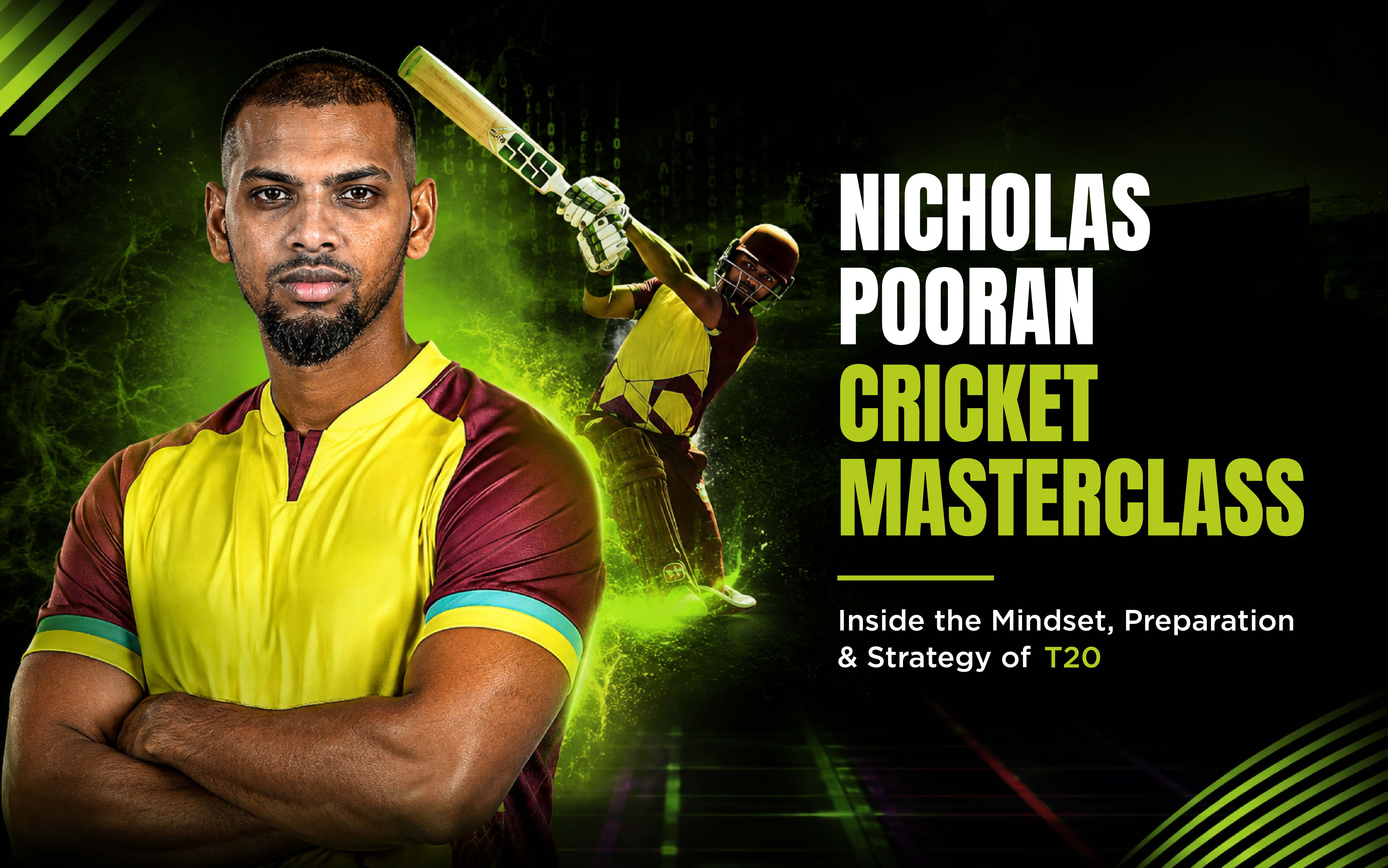
Nicholas Pooran Cricket Masterclass: Inside the Mindset, Preparation & Strategy of T20
Watch Nicholas Pooran break down T20 batting, technique, mindset, and preparation in Arena365’s five-part masterclass, launching September 3 on YouTube.
Latest articles
Who Is the Most Dangerous Batsman in the World Right Now?
A format-by-format breakdown of who's actually terrifying bowlers in 2026, and why the answer depends on which format you're asking about.
Cricket Bet Online: 7 Bowling Techniques Every Bettor Should Recognize
A quick guide to the deliveries that actually shift a match, and why spotting them helps before you place a cricket bet online.
How to Win Online Slots: Why the Wait Between Wins Is the Whole Design
How to win online slots really depends on understanding why the gap between wins, not the win itself, is what keeps a session compelling.
Tennis Betting Odds: Why a Single Set Can Flip the Whole Price
Tennis betting odds can swing on a single set, or even a single point, more sharply than a football price moves across a full half.