
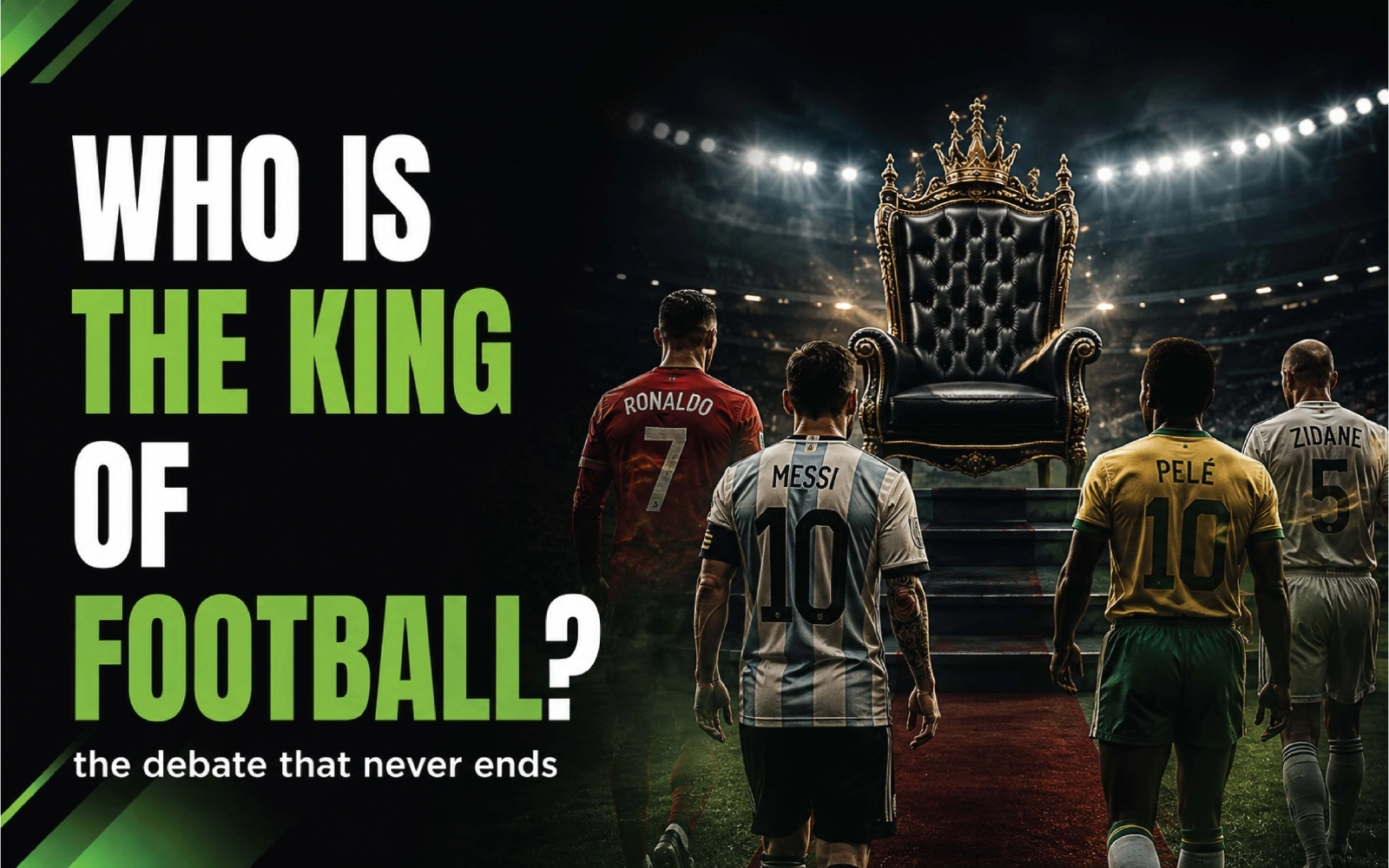
Who Is the King of Football? The Debate That Never Ends
Ask 10 football fans who the king of football is and you'll probably get 10 different answers. Pelé, Maradona, Messi and Ronaldo each have their own case, so we're putting the stats, trophies and stories behind all four side by side.
Who Is the King of Football? It's one of those arguments that never actually goes anywhere. Bring it up around a group of fans and someone's getting worked up within five minutes. Some people are Messi for life. Others won't hear a word against Ronaldo. A few will tell you Maradona settled this decades ago and everyone else is just late to the party. So where does the "king" title even come from? And why can't fans agree on who deserves it?
Who Is the King of Football?
Historically, the title belongs to Pelé. Known as "O Rei,” Portuguese for "The King," he's the only player to win three FIFA World Cups, and FIFA itself has repeatedly referred to him as "The King" in official tributes. But the debate hasn't stayed settled. Fans just as often crown Maradona, Messi or Ronaldo, depending on what they value most: trophies, records, or pure entertainment.
Why Is Pelé Called the King of Football?
1958, Sweden. A 17-year-old Brazilian kid makes his World Cup debut, youngest player in the tournament. He ends up on his teammates' shoulders after scoring twice in the final, a 5-2 win over the host nation. Look up football history and Pelé's name shows up next to "football king" more than just about anyone's. Three World Cups. A player who introduced the sport to millions of people who'd never seen it before, in an era with no social media, no streaming, none of that.
Playing Style
There wasn't one thing Pelé did well. That was kind of the point. He could finish with either foot, win headers, set up teammates, and he had the athleticism to back it all up. Not a specialist. Just good at everything. And somewhere along the way, what people remember most isn't even the goals, it's how he made people feel watching him.
Trophies and Stats
3x World Cup winner (1958, 1962, 1970) and still the only player to do this
Over 1,000 career goals across club and country (this number includes friendlies, which is exactly why people still argue about it)
Multiple league titles with Santos
2 Copa Libertadores, 2 Intercontinental Cups, both with Santos in the '60s
He picked up the nickname "O Rei" along the way, and it stuck. FIFA kept using it in tributes for decades. When he died in 2022, the outpouring was enormous, presidents, royalty, players who never even saw him play in person, all calling him "The King."
Part of that comes down to more than football. He grew up with nothing and became one of the most recognizable people alive. That story alone gave people hope. He turned Brazilian football into something the whole world watched, and helped make the sport what people now call "the beautiful game."
Older fans, football historians, a lot of them just stop the debate here. King of football? Pelé. Case closed, as far as they're concerned.
Then Came Maradona
While Pelé was busy becoming the face of Brazilian football, somewhere further south, a kid was already turning heads. A generation after Pelé, a different kind of player showed up in Argentina, one who seemed to break the rules of the sport whenever he touched the ball.
Diego Maradona actually missed out on the 1978 World Cup, played on home soil in Argentina, because he was 17 and the coach thought he was too young. He got his shot four years later, in Spain, 1982, and it was rough. Played every minute of all five matches, scored twice against Hungary, but spent most of the tournament getting fouled into the ground. Then 1986 happened. He captained Argentina to the title, beating West Germany in the final.
Playing Style
He didn't look the part. Short, stocky, nothing like the physical specimens football tends to celebrate. None of that mattered once the ball was at his feet. Low centre of gravity, unbelievable close control, defenders just couldn't get near him. He'd slide through pressure that should've swallowed him whole.
Trophies and Stats
11 major trophies across 21 years, 311 official club goals in 588 matches. The 1986 World Cup is the headline, obviously, but there's more: the FIFA World Youth Championship in '79, the Artemio Franchi Trophy in '93. Two Serie A titles with Napoli (1986-87 and 1989-90), plus a Coppa Italia, a UEFA Cup, and a Supercoppa Italiana. Before Napoli, at Barcelona, he won the Copa del Rey, the Copa de la Liga, and the Supercopa de España, all within about a year. And earlier still, an Argentine league title with Boca Juniors in 1981. Fans who grew up on Maradona don't need a trophy count to make their case. One tournament, one club, and highlights people still slow down to watch, that's usually enough.
Where Messi Fits Into the Crown
Maradona's case runs on chaos. Messi's is almost the opposite. He was four when he joined his first club, Abanderado Grandoli, coached by his own father. At seven, he moved to Newell's Old Boys in Rosario. Three years later came a growth hormone deficiency diagnosis, and treatment starting at age 11, which is not exactly the start you'd draw up for someone who'd go on to break every scoring record in the sport. Barcelona debut in 2004. Argentina debut in 2005.
Playing Style
Nothing about how Messi plays is loud. He never seems to be announcing anything. He just sees the pass before anyone else on the field does, and by the time a defender reacts, the ball's already somewhere they didn't expect. That's probably why "king" gets attached to him so often, it's not flash, it's just quiet inevitability.
Trophies and Stats
922 official career goals. About 420 assists. Somewhere around 1,342 goal contributions across roughly 1,169 matches. Eight Ballon d'Ors, still the record. 48 official trophies for club and country, also a record.
With Argentina: The 2022 World Cup, two Copa Américas (2021, 2024), the 2022 Finalissima, Olympic gold from 2008, and a FIFA U-20 World Cup back in 2005.
At club level, mostly Barcelona, plus Paris Saint-Germain and now Inter Miami: four Champions Leagues, ten La Liga titles, seven Copa del Reys, eight Spanish Super Cups, three UEFA Super Cups, three Club World Cups, two Ligue 1 titles, and a few smaller ones, a Trophée des Champions, a Leagues Cup, a Supporters' Shield, an MLS Cup.
Ask a Messi fan why they call him king, though, and they usually skip the stats entirely. They'll bring up 2022. Argentina. A career finally closing its one open gap.
There's a sadder footnote to the story now, too. 2026, what he'd said would be his last World Cup, and Argentina made it all the way back to the final, only to lose 1-0 to Spain in extra time. He walked away with the Silver Ball and the all-time World Cup records for assists and appearances, no back-to-back title though. Fans don't seem to hold that against him. If anything, that run got pointed to as more proof of exactly what made him "king" in the first place.
And Then There's Ronaldo
If Messi's case is about making it look effortless, Ronaldo's is the opposite. His is about refusing to stop. His story starts earlier than most people think. Joined his first club, Andorinha, in 1992, age seven. Moved to Nacional in 1995, age ten. By 1997, twelve years old, he was already in Sporting CP's academy, one of the biggest clubs in Portugal. Professional debut in 2002, age 17, same age Pelé had been at his own World Cup debut, decades apart, same number.
Playing Style
Nobody's ever called Ronaldo a natural who coasted. His whole career reads like an argument against slowing down. Explosive in his twenties, still dominant in the air and clinical in front of goal well into his forties. The conditioning alone is unusual, most players his age hung their boots up years ago.
Trophies and Stats
976 senior goals across 1,326 official matches, just under 0.74 goals per game. Football's all-time leading international scorer, 146 goals in 233 appearances for Portugal. Five Ballon d'Ors, three The Best FIFA Men's Player awards, 35 major trophies total.
With Portugal: The 2016 Euros, plus two UEFA Nations League titles, 2019 and 2025.
Real Madrid, nine years: Four Champions Leagues, two La Liga titles, three UEFA Super Cups, three Club World Cups, two Copa del Reys, two Spanish Super Cups.
Manchester United, two spells: A Champions League, three Premier League titles, an FA Cup, two League Cups, a Community Shield, a Club World Cup.
Juventus: Two Serie A titles, a Coppa Italia, two Supercoppa Italianas.
And more recently, Al-Nassr plus his early Sporting CP years: a Saudi Pro League title, an Arab Club Champions Cup, a Supertaça Cândido de Oliveira.
What fans bring up first, though, isn't any of that. It's the mentality. The refusal to decline gracefully, or at all. Chasing a milestone at 41 that literally no one in the history of the sport has reached. To his supporters, that's the whole argument right there, the throne isn't inherited, it's earned, over and over, year after year.
So Who Actually Wears the Crown?
Honestly? Nobody agrees, and probably nobody ever will. Pelé's got history and an official FIFA nickname on his side. Maradona's got one tournament and a city that still treats him like a saint. Messi's closed every gap in his résumé, and even a brutal loss in the 2026 final didn't change how fans see him. Ronaldo's rewritten what longevity is supposed to look like, and he's still not done.
Maybe that's the real point of debates like this. Who is the king of football? It was never really about landing on one answer. It's about which kind of greatness speaks to you most, history, chaos, quiet brilliance, or pure stubborn will. And honestly? Football's probably more fun because nobody's agreed yet.
So whether you're firmly in the Pelé camp, still believe Maradona never got his due, or think the Messi vs Ronaldo era changed football for good, one thing's certain: this is a debate that isn't going anywhere.
For more football content, stats, and everything else the beautiful game has to offer, visit the Arena365 homepage.
 1
1Dragon Tiger Casino: How Emperor Dragon Tiger Actually Works
🎲 Casino 0 2
2What Is a Diamond Duck in Cricket?
🏏 Cricket 0 3
3BOTH TEAMS TO SCORE (BTTS) EXPLAINED: MEANING, STRATEGY AND EXAMPLES
⚽ Football 0 4
4ARENA365 GUIDE TO BETTING BANKROLL MANAGEMENT AND STAKING PLANS
🃏 Live Casino 0 5
5How to Read a Bet Slip: Understanding Sports Betting Odds, Stake, and Potential Return
🎲 Casino 0
Expertise · Football, European Leagues & Betting Analysis
Daniel is a football analyst focused on European football, major competitions, and betting insights. He specializes in tactical analysis, team performance, player statistics, and match trends. Daniel uses research-based analysis to provide readers with detailed football previews and insights into betting markets.
Related guides & analysis

Nicholas Pooran Masterclass series
Inside the mindset, preparation and strategy behind T20 cricket.
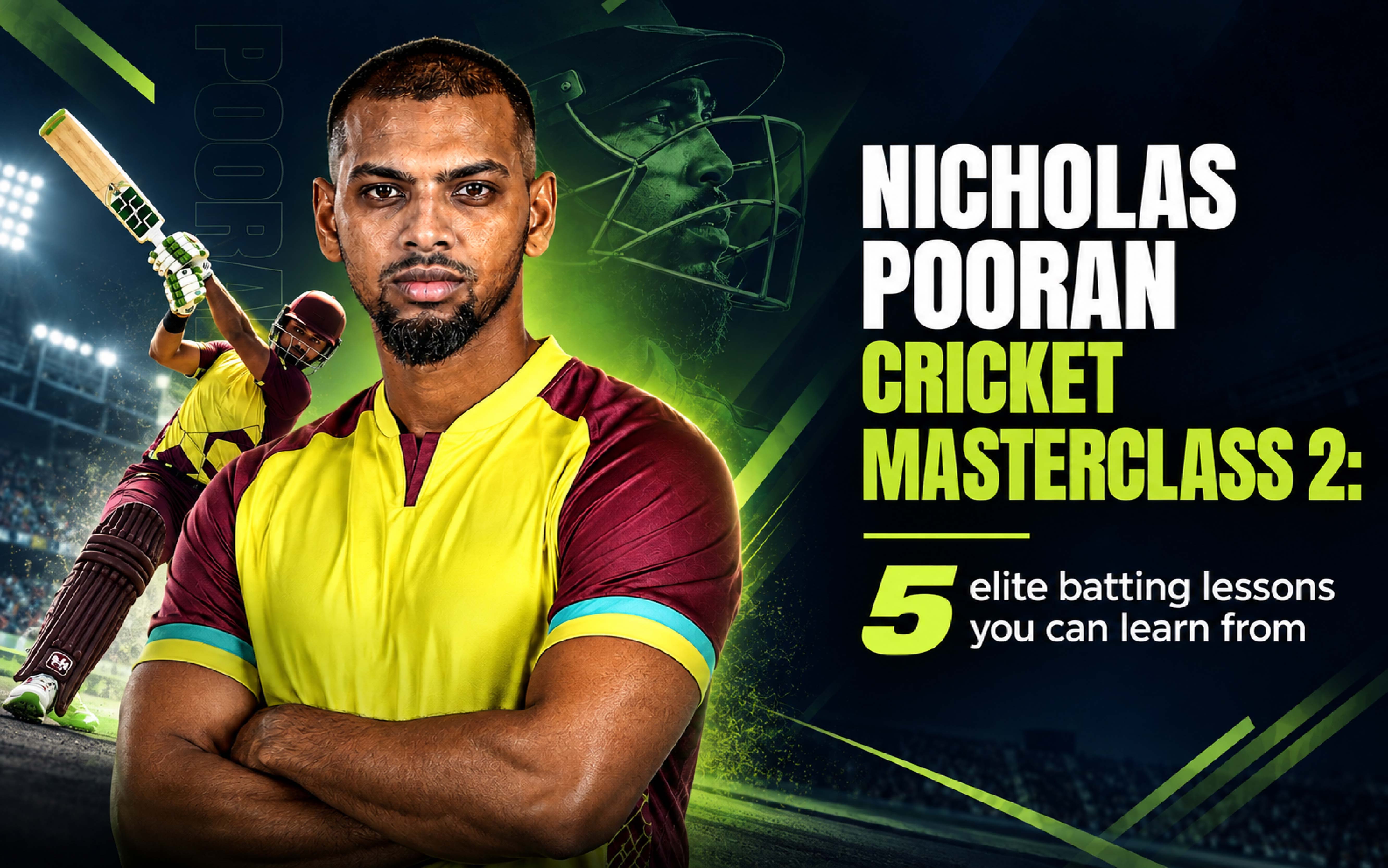
Nicholas Pooran Cricket Masterclass 2: 5 Elite Batting Lessons You Can Learn From
Arena365 ambassador Nicholas Pooran breaks down the batting mindset that separates good players from truly elite ones.
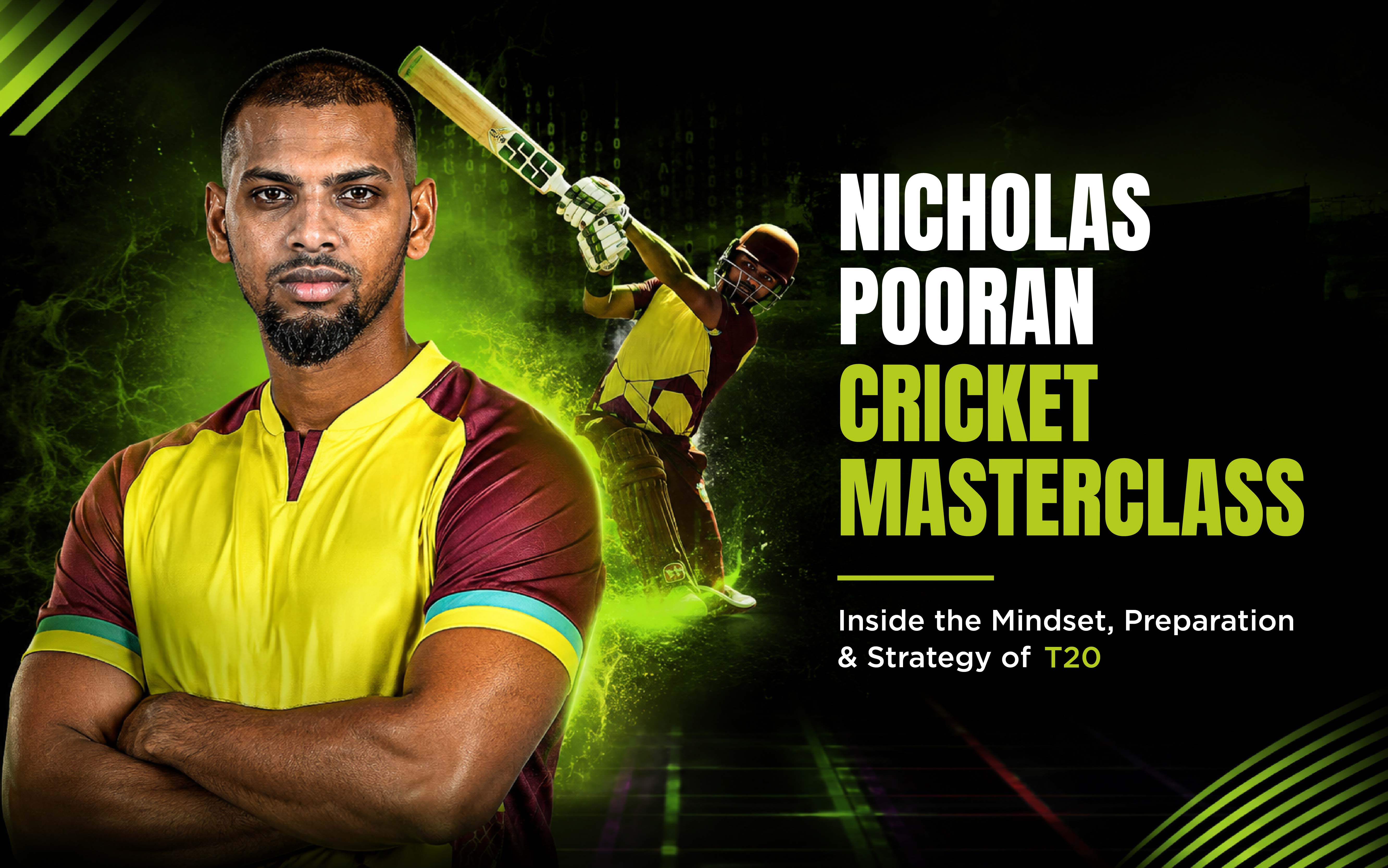
Nicholas Pooran Cricket Masterclass: Inside the Mindset, Preparation & Strategy of T20
Watch Nicholas Pooran break down T20 batting, technique, mindset, and preparation in Arena365’s five-part masterclass, launching September 3 on YouTube.
Latest articles
Dragon Tiger Casino: How Emperor Dragon Tiger Actually Works
A rules-first breakdown of one specific live dragon tiger casino table, straight from its actual game mechanics and payout structure.
What Is a Diamond Duck in Cricket?
The rarest, most unforgiving way to get out, dismissed for nothing without even facing a ball, a fate that's caught out even Virat Kohli and Angelo Mathews.
BOTH TEAMS TO SCORE (BTTS) EXPLAINED: MEANING, STRATEGY AND EXAMPLES
What Both Teams to Score actually means, how it settles, and a genuinely useful way to research the market before you place a BTTS bet on Arena365.
ARENA365 GUIDE TO BETTING BANKROLL MANAGEMENT AND STAKING PLANS
Your betting strategy matters less without a staking plan. See how bankroll management, level stakes, Kelly, and percentage staking help control risk.